Design the future of Meal Planning
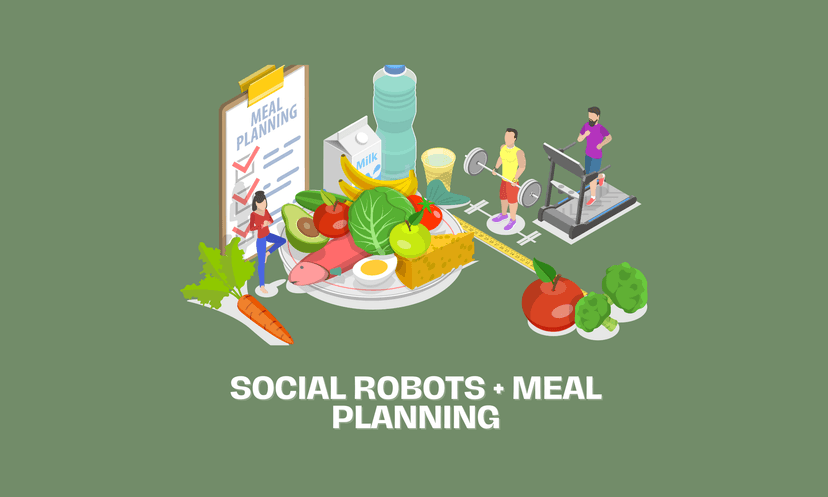
This project explored how technology and nutrition can come together to address the question: How can social robots help users follow a personalized meal plan?
Project Details
Location
Trento, italy
Duration
4 months
Team
4 members
Context
University Project (Qualitative Research Methods & Participatory Design)
Role
User Researcher
Participatory Design
Challenge
Meal planning helps maintain a healthy diet, but:
- Difficult to sustain over time
- Tools feel confusing and not personalized
- University students often lack time and support
Goal
Goal
Explore how social robots could help students stick to meal plans
How can social robots support users in following a personalized meal plan?
Process
To explore how social robots could support meal planning, we conducted user research and a participatory design workshop. The following sections detail our approach and findings.
User Research
Observations
Observed people in everyday food-related settings (canteens, restaurants, and grocery stores). The goal was to see how people actually make decisions about food. What do they choose? What seems to influence those choices? Are they making quick decisions based on time, or are they considering other factors like cost or preferences?
Interviews
Conducted 8 semi-structured interviews to explore eating habits, approach to meal planning, and technology use for meal planning. Many participants also talked about how hard it can be to balance everything (cost, time, and nutrition) and how this often stops them from sticking to a plan.
Focus Group
Held a focus group with 6-8 participants to explore how a social robot might help with meal planning and what features they thought were most important. Ideas like personalization, flexibility, and real-time adaptability were discussed, along with concerns about trust and usability. This helped us understand what users would want from a robot assistant in this context.
Participatory Design Workshop
Goal
After doing a coding analysis of the research data, we identified key themes and insights that informed the design of a participatory workshop. The goal of the workshop was to co-create solutions with users, focusing on how a social robot could support meal planning. We wanted to understand what features and interactions would be most valuable from the users' perspective.
Activities
- Ice breaker: physical kahoot
- Team creation: 4 teams (Vitamin C, Calorie, Gluten-free, Protein) of 2-3 people
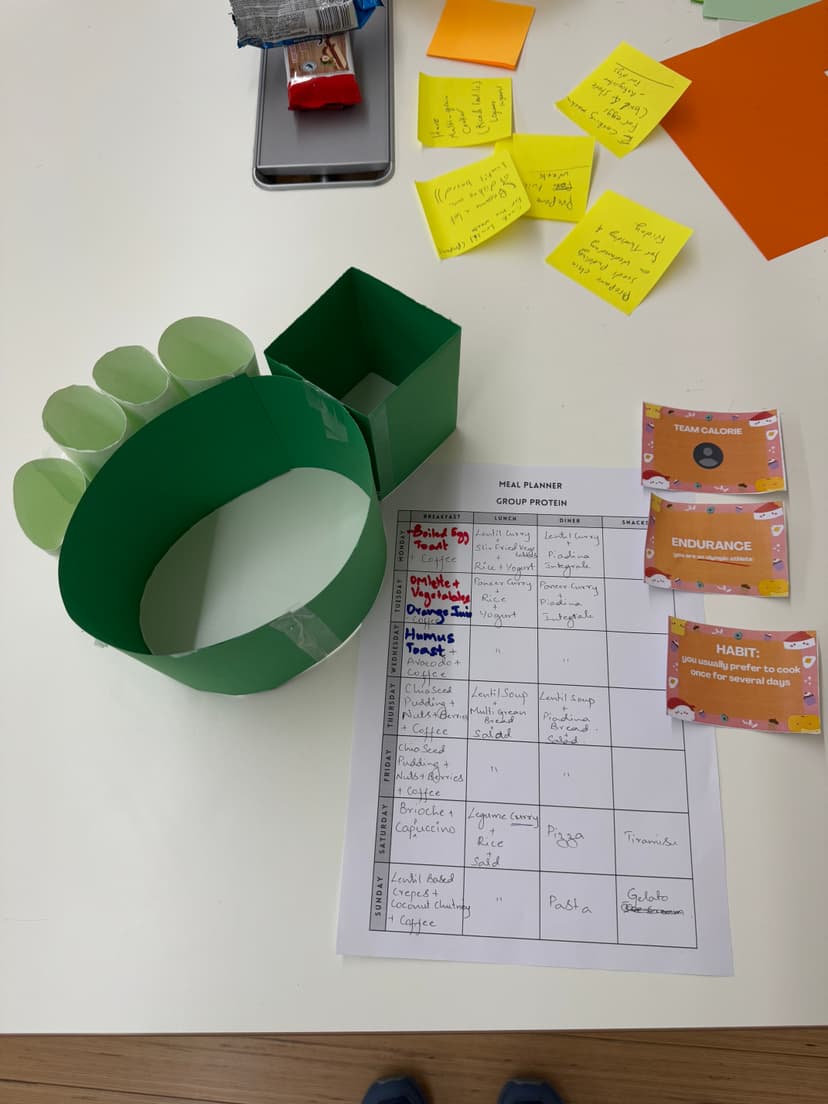
- Meal plan creation: each team created a meal plan for a week based on their assigned goal (e.g., muscle gain, endurance, weight-loss, balance diet).
- Brainstorming: teams exchanged their meal plans, an habit was proposed and they have to brainstorm about problems related and then solutions.
- Prototyping: teams created a low-fi prototype of their solution using paper, markers, and other materials.
- Final Presentation: each team presented their prototype and received feedback from the other teams and facilitators.
- Reflection: participants reflected on the final prototypes using the must - missed - won't include - necessary interaction type framework.
Results
Key Findings
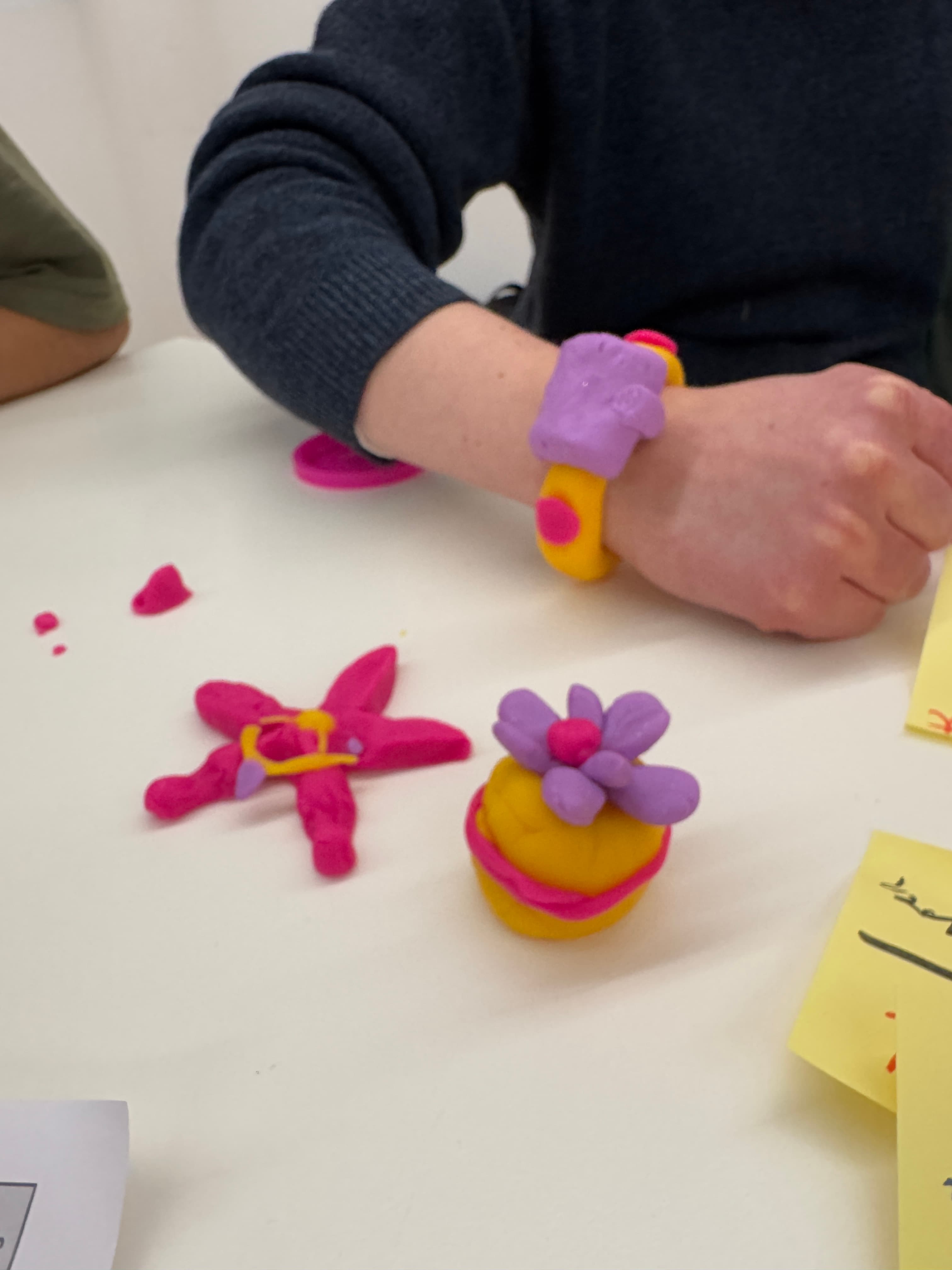
In the final presentations, one group proposed a machine that prepares meals using ingredient slots connected to a meal plan. Another concept was a bracelet acting as a personal nutrition advisor suggesting what to cook based on your schedule. A third idea was a kitchen flower that recommends meal options.
MUST
minimize food waste, empathize with users, and adapt food storage to ingredient characteristics
MISSED
notifications and evidence-based nutritional recommendations
WON'T INCLUDE
features perceived as rigid, controlling, or time-consuming
Conclusions
Main Conclusion
Using multiple qualitative methods, this project explored how technology could support students in following a personalized meal plan. Observations, interviews, and a focus group revealed that maintaining a meal plan is challenging mainly due to time constraints, daily unpredictability, and the effort required to organize meals. Through coding analysis and a participatory workshop, participants explored potential technological solutions. The findings suggest that tools supporting meal planning should prioritize flexibility and contextual assistance, helping users adapt their plans to real-life situations rather than enforcing rigid routines.
Supportive Technology
Participants expressed a preference for technologies that act as assistants rather than controllers. Systems should guide users through suggestions, reminders, or contextual recommendations while still allowing them to maintain autonomy over their decisions.
Context-Aware Interaction
Meal planning support should adapt to everyday constraints such as schedule changes, available ingredients, or eating outside the home. Designing systems that respond to context may help users stay aligned with their nutritional goals without creating additional cognitive effort.
Future Research
- Conduct additional focus groups to evaluate reactions to the wearable assistant concept and refine its interaction design.
- Prototype and test interactive systems that provide contextual meal planning recommendations.
- Study how technological assistance influences long-term adherence to personalized meal plans.
- Explore how voice interaction could support meal planning in everyday environments such as kitchens or grocery stores.
Key Learnings
- Using triangulation (observations, interviews, and focus groups) provides a deeper understanding of everyday food decision-making.
- Coding qualitative research data helps transform user observations into actionable design insights.
- Participatory design workshops enable participants to actively shape early-stage technology concepts.
- Designing for health-related behaviors requires balancing guidance with user autonomy and flexibility.
Additional Materials
Workshop presentation
Access the complete presentation slides explaining the participatory design workshop process and outcomes.
View presentation →Final report
Access the complete research report with detailed methodology, analysis, and findings.
View PDF →Want to Learn More?
For questions about this project or collaboration opportunities, feel free to reach out.
Contact Me →