Reward Effects on Physiological Arousal in an Object Retrieval Task
An experimental study measuring how rewards influence heart rate variability (HRV) and skin conductance response (SCR) during gameplay.
Project Details
Location
Trento, Italy
Duration
Short experimental project
Team
4 members
Context
University course (Cognitive Neuroscience & Neurotechnology)
Role
Experimental Design
Data Collection
Data Analysis Support
Challenge
Rewards are known to influence motivation and engagement, but how do they affect the autonomic nervous system?
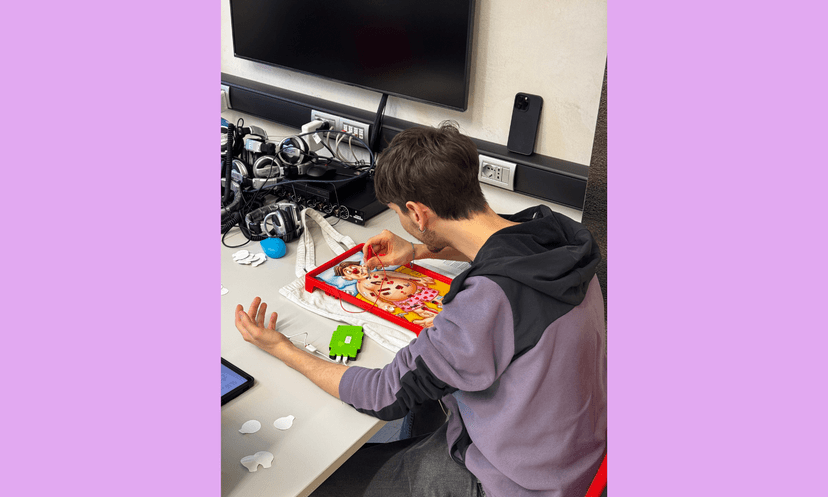
- Does the presence of a reward change Heart Rate Variability (HRV) and Skin Conductance Response (SCR) during an object retrieval task (Operation game)?
Goal
Goal
Compare physiological responses, behavioral performance and emotional perception under reward vs. no-reward conditions.
Rewards decreases HRV and increases SCR during gameplay, indicating higher sympathetic arousal.
Higher arousal will correlate with better performance
Process
To investigate how rewards affect physiological responses and performance during a visual-motor task (Operation), we ran a within-subject experiment with two conditions (reward vs. no-reward), collected EDA and ECG, and compared outcomes using paired analyses. The following sections describe the procedure, measures, and analysis approach.
Experimental Setup
Design
We used a within-subjects design with two conditions: Reward vs. No-reward. Each participant completed both conditions, enabling direct comparison of physiological and performance changes.
Materials & Instruments
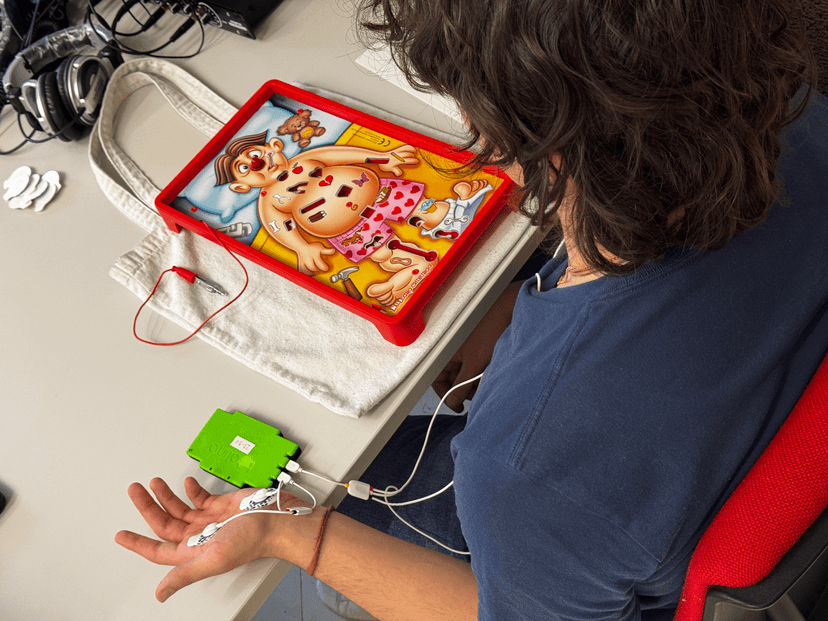
- Operation game (visual-motor task)
- EDA sensor (for SCR)
- ECG sensor (for HRV)
- Self-report: SAM questionnaire after each round
Procedure
Sensor Setup
Sensors were placed on the non-dominant hand to reduce interference with gameplay movements.
Baseline Recording
Participants completed a 120-second baseline to estimate resting physiological activity before gameplay.
Task Blocks
Participants played 60 seconds per condition (Reward and No-reward). After each round, they completed the SAM questionnaire.
Measures & Signal Processing
EDA (SCR)
Electrodermal activity was recorded to extract skin conductance responses as an index of arousal.
ECG (HRV)
Electrocardiography data were used to compute heart rate variability (IBI mean, HRV indices).
Performance Metrics
Number of extracted pieces and number of errors during the Operation task.
Subjective Ratings
Valence, arousal, and dominance measured using the SAM questionnaire after each condition.
Data Analysis
Condition Comparisons
We compared HRV and SCR between reward and no-reward conditions to test whether incentives changed physiological responses.
Performance Effects
We compared performance metrics between conditions using paired t-tests (within-subject comparisons).
Subjective Experience
We computed mean SAM ratings (valence, arousal, dominance) for each condition and interpreted them alongside physiological and performance results.
Results
Key Findings
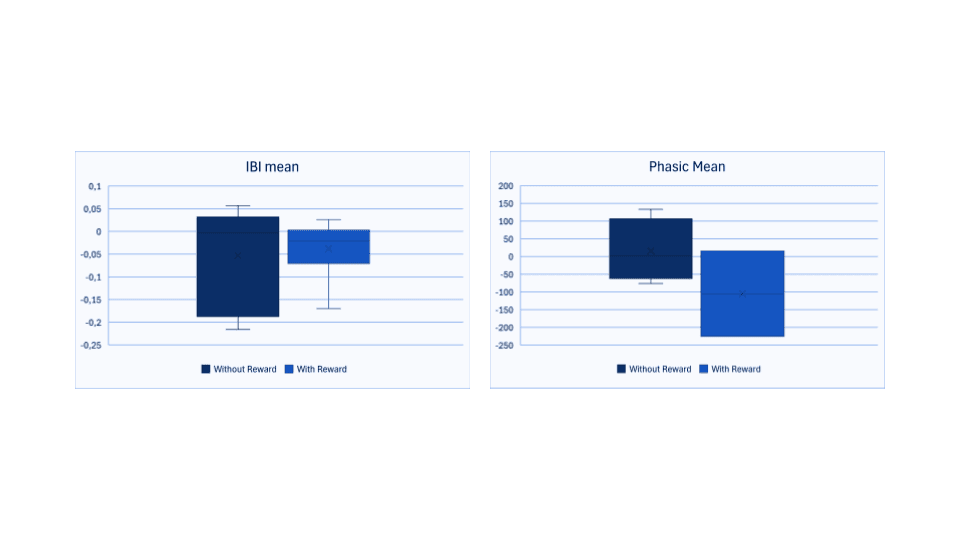
Participants showed a more stable IBI mean and negative phasic mean values in the reward conditions, suggesting more regulated autonomic activity. Performance improved with rewards, and subjective ratings indicated less valence and higher dominance in the reward condition.
SAM Results by Condition
5.55/9
perception in the arousal dimension for both conditions
6.67
mean number of pieces collected in the reward condition, compared to 5.33 in the no-reward condition
0.025
p-value for the significant difference in the number of pieces collected between reward (more pieces) and no-reward conditions
Conclusions
Main Conclusion
This study examined how rewards influence physiological responses, behavioral performance, and emotional perception during a visual-motor task. The results showed that reward conditions improved task performance while physiological measures suggested regulated autonomic activity during gameplay. These findings indicate that motivational incentives can enhance engagement and performance without necessarily increasing physiological stress.
H1 — Not Supported
The first hypothesis predicted that rewards would increase sympathetic arousal, reflected by decreased HRV and increased SCR during gameplay. However, physiological measures suggested relatively stable autonomic activity, indicating that rewards did not strongly increase physiological arousal during the task.
H2 — Partially Supported
The second hypothesis predicted that higher arousal would correlate with better performance. While reward conditions improved behavioral performance, physiological measures did not show a clear increase in arousal. This suggests that motivation may improve performance without necessarily producing stronger physiological activation.
Future Research
- Investigate how different reward types influence physiological responses and performance.
- Explore the relationship between motivation and physiological responses with more participants.
- Examine whether similar reward effects appear in more complex cognitive or motor activities.
- Combine physiological data with additional behavioral measures to better understand engagement.
Key Learnings
- Rewards can positively influence task performance and engagement.
- Physiological signals provide complementary insights into user responses during task execution.
- Motivation may stabilize physiological responses while improving behavioral outcomes.
- Combining physiological, behavioral, and subjective measures helps provide a more complete understanding of user experience.
Additional Materials
Want to Learn More?
For questions about this project or collaboration opportunities, feel free to reach out.
Contact Me →