Voice Agent for International Students
A challenge-based project developed with CM.com to explore how their HALO voice agent could support international students at TU/e through conversational AI.
Project Details
Location
Eindhoven, The Netherlands
Duration
6 weeks
Team
6 members
Context
University-industry challenge project
Role
User Researcher
Solution Ideation
User Testing
Challenge
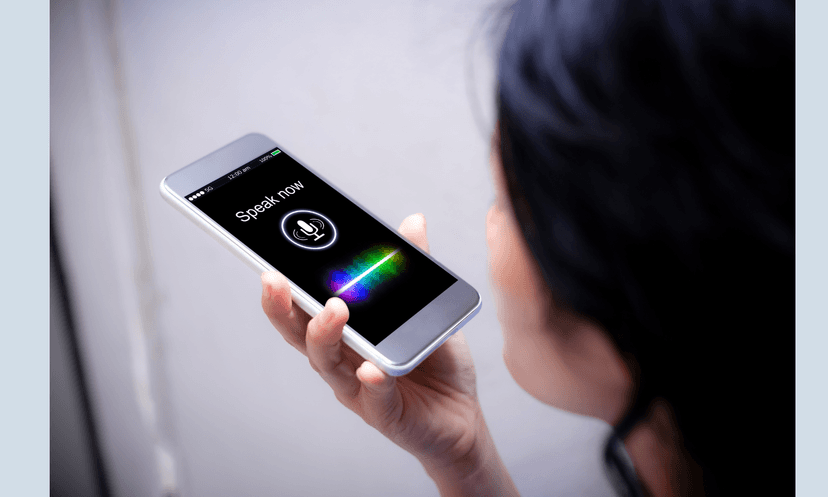
CM.com wanted to explore how their HALO voice agent could be implemented in a university context.
- How can a voice agent meaningfully support international students?
- While chatbots are common, we needed to evaluate whether a voice interface could offer added value and under which conditions it would be appropriate.
International students often struggle with:
- Navigating administrative systems
- Understanding visa, housing, and healthcare procedures
- Not knowing where to find reliable information
- Language barriers
Goal
G1
Identify and select a high-impact use case for a voice agent in the university setting
G2
Design and prototype a voice-based solution addressing the identified use case.
G3
Evaluate the solution's usability and potential impact through user testing.
Process
To explore how a voice agent could support international students, we conducted user research, defined design requirements, ideated a solution, and evaluated it through user testing. The following sections detail each step of our process.
Context & User Research
PESTLE Analysis
Analyzed political, legal, social, and technological constraints shaping institutional communication and AI deployment in a university context.
User Interviews
Interviewed international students to uncover pain points during pre-arrival and onboarding processes.
Stakeholder Mapping
Mapped actors including CM.com, TU/e services, and governmental institutions to clarify responsibility boundaries.
Key Pain Points
- Unclear administrative procedures
- Information fragmentation
- Language barriers
- Uncertainty about official sources
Requirements & Risk Definition
Design Requirements
- Transparency about what the agent can and cannot do
- Multilingual support and clear language (avoid bureaucratic jargon)
- Clear scope boundaries (reduce misleading guidance)
- Human fallback options and escalation paths
- Structured and maintainable knowledge base
Human Values
- Trust
- Inclusivity
- Reliability
- Autonomy
Risks Factors
- Misinformation or outdated information
- Over-reliance on the agent for high-stakes decisions
- Unequal experience across languages
Accountability Considerations
Defined escalation paths and clarified the steps for topics out of the agent's scope.
Ideation & Concept Development
Define the Design Space
We explored multiple support formats and narrowed the scope to a voice agent that supports international students specifically in pre-arrival and arrival phases.
Conversation Structure & Voice Flows
We created voice flows for key tasks (e.g., registration, housing steps, local resources), focusing on clarity, error recovery, and user control.
Success Indicators & Evaluation Criteria
We defined success indicators (e.g., clarity, perceived trust, task completion confidence) and evaluation criteria to guide testing and iteration.
Evaluation with Target Users
Method
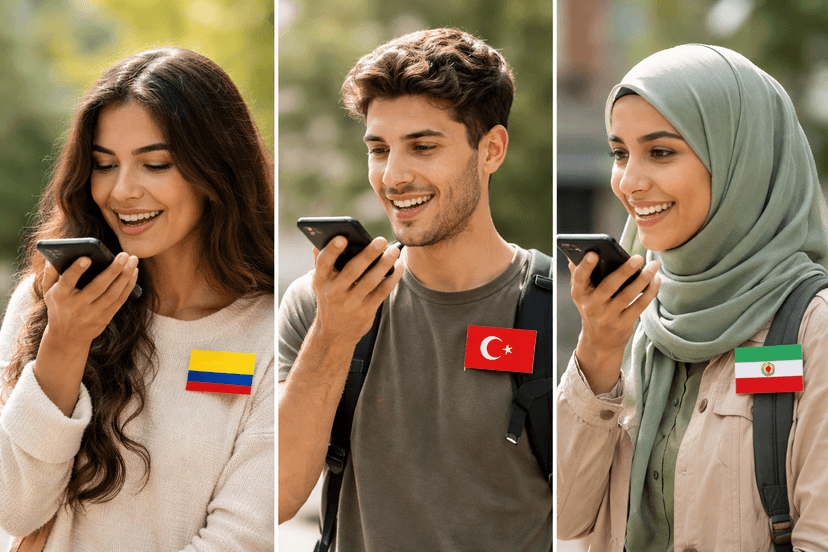
We ran a focus group with international students from different nationalities. Participants interacted with the voice agent, tested multiple languages, and reflected on usability, clarity, trust, and expectations.
What We Looked For
- Where users get stuck or ask for repetition
- Whether the agent communicates limits and uncertainty
- If multilingual responses remain consistent in meaning
- When users prefer a human handoff
Results
Key Findings
Focus group feedback showed strong support for written summaries after the call, while continuity, inclusivity, and privacy were only partially validated and highlighted areas for improvement.
Focus Groups Ealuation Criteria
4/5
criterions were met or partially met
8/11
requirementes were met or partially met according to user feedback
7/8
values were met or partially met according to user feedback
Conclusions
Main Conclusion
This project explored how a voice agent could support international students during the pre-arrival and onboarding phases. The findings highlighted that voice interfaces require clearer boundaries and structured information compared to chat-based systems. Participants emphasized the importance of trust, transparency, and reliability when interacting with AI in institutional contexts. Rather than replacing human services, the voice agent should act as a complementary tool that helps students navigate information and access support more easily.
Scope Definition
Voice agents should operate within a clearly defined scope of information and tasks. Limiting the domain of interaction can reduce misunderstandings and improve reliability when users request guidance.
Trust & Transparency
AI systems designed for educational services should communicate their capabilities and limitations clearly. Providing explanations, fallback options, and access to human assistance can help build user trust.
Future Research
- Evaluate the usability of voice agents for international student support through user testing.
- Compare voice interaction with chatbot interfaces for information retrieval tasks.
- Study how transparency mechanisms influence user trust in AI-based university services.
Key Learnings
- Voice interfaces require stricter scope definition than text-based chat systems.
- Trust and transparency are essential in AI systems operating in institutional contexts.
- AI tools in education should support existing services rather than replace human interaction.
Additional Materials
Prototype demonstration
Watch a demonstration of the voice agent prototype, showcasing its conversational capabilities and multilingual support.
Watch demo →View the presentation
Access the complete presentation slides explaining the design process, evaluation, and conclusions of the voice agent project.
View presentation →Read the full report
Access the complete research report with detailed methodology, analysis, and findings of the voice agent project.
View PDF →Want to Learn More?
For questions about this project or collaboration opportunities, feel free to reach out.
Contact Me →